
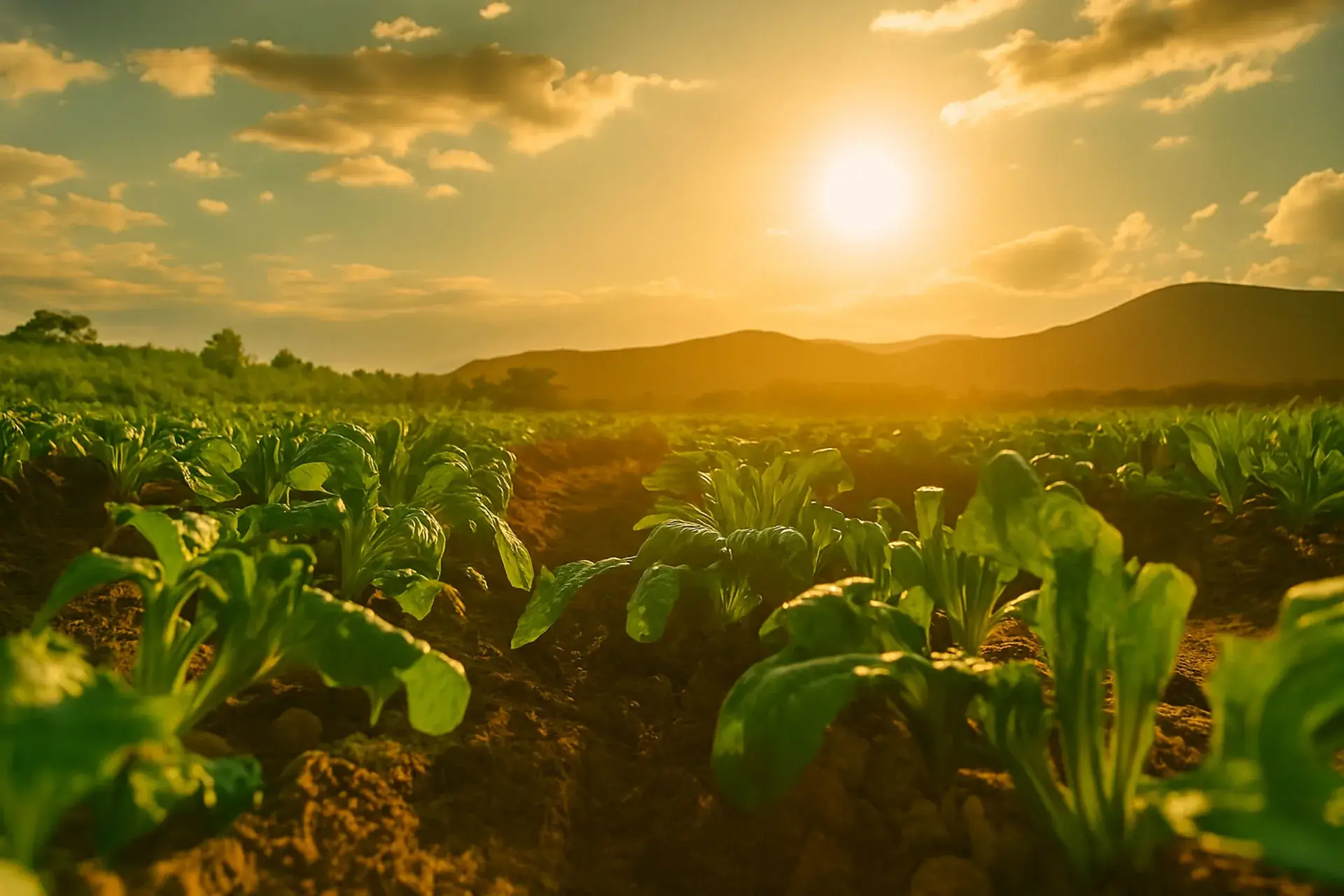
Restoring Life to the Land
In the quest for higher yields, modern agriculture often falls into the trap of monoculture—growing the same crop year after year. However, nature thrives on diversity. Crop rotation, the practice of growing a series of different types of crops in the same area across a sequence of growing seasons, is not just an ancient tradition; it is a cornerstone of soil regeneration.
By mimicking natural ecosystems, crop rotation transforms the soil from a mere substrate into a thriving, self-sustaining biological engine.
1. Restoring Nutrient Balance and Nitrogen Fixation
Every plant has a unique “nutrient signature”—it takes specific elements from the soil and leaves others behind. Monoculture depletes specific nutrients, leading to a reliance on synthetic fertilizers.
The Legume Advantage: Integrating legumes (like alfalfa, beans, or clover) is the most famous regenerative rotation. These plants host Rhizobia bacteria in their roots, which convert atmospheric nitrogen into a form plants can use ($N_2 \rightarrow NH_3$).
Heavy Feeders vs. Soil Builders: A regenerative cycle often follows “heavy feeders” (like corn or tomatoes) with “soil builders” (like peas) and “light feeders” (gains or root vegetables) to ensure the soil is never fully exhausted.
2. Improving Soil Structure and Water Infiltration
Soil is not just dirt; it is a complex architecture of pores and aggregates. Crop rotation acts as a “biological plow.”
Diverse Root Architectures: Rotating shallow-rooted crops with deep-taproot plants (like radishes or sunflowers) helps break up subsoil compaction. This creates “macropores” that allow water to penetrate deeper into the earth, increasing drought resilience.
Organic Matter Accumulation: Different crops contribute different types of “root exudates” and residues. This diversity feeds a wider range of soil microbes, which produce glues (glomalin) that bind soil particles together, preventing erosion and improving aeration.
3. Breaking Pest and Disease Cycles
Pests and pathogens are often host-specific. When the same crop is planted repeatedly, these populations build up to catastrophic levels.
Natural Disruption: Changing the host plant effectively “starves” soil-borne pathogens and specific insects. For example, rotating corn with soybeans disrupts the life cycle of the corn rootworm.
Bio-fumigation: Certain crops, like mustard or marigolds, release natural compounds into the soil that act as organic suppressants for nematodes and fungi, cleaning the soil for the next season’s harvest.
4. Enhancing Biodiversity and Carbon Sequestration
Regenerative agriculture focuses on the soil as a carbon sink. Crop rotation is a primary tool for Carbon Sequestration.
| Rotation Strategy | Primary Benefit | Regenerative Impact |
| Cover Cropping | Prevents erosion | High Carbon Sequestration |
| Legume Rotation | Nitrogen Fixation | Reduced Chemical Footprint |
| Deep-Rooted Crops | Soil Aeration | Enhanced Water Retention |
A more diverse rotation leads to a more diverse microbial community. These microbes process carbon more efficiently, locking it into the soil as Soil Organic Matter (SOM), which is the ultimate indicator of a regenerated field.
5. Economic Resilience: The Farmer’s Reward
Soil regeneration through rotation isn’t just an environmental win; it’s an economic one. By reducing the need for synthetic nitrogen and pesticides, farmers can lower their input costs. Studies in 2025 and 2026 have shown that diverse rotation systems can increase long-term profitability by 15-20% compared to intensive monoculture systems.
Key Takeaway: Soil regeneration is a marathon, not a sprint. Crop rotation is the rhythm that allows the land to recover, breathe, and produce abundantly for generations to come.